
By Sherry Harbert
Among all the human rights violations that occur around the world, the Democratic Republic of Congo (DRC) may hold some of the worst. The atrocities are so overwhelming that words alone cannot describe the depth of what is happening. The images can be so graphic that they are largely ignored by the media and public. Such atrocities cannot continue, so members of the Congolese Community of Oregon and the Portland Chapter of Amnesty International have combined forces to launch a public outreach campaign.
Founders of the Voices for Congo organization spoke before a packed audience on March 13, to offer their concerns, their hopes and their voices to ending the horrors in the DRC. They each conveyed a stark reality that many Americans find surprising. The demand for cell phones, laptop computers, gaming devices and other hi-tech gadgets is what is fueling the continuation of the atrocities in the DRC.
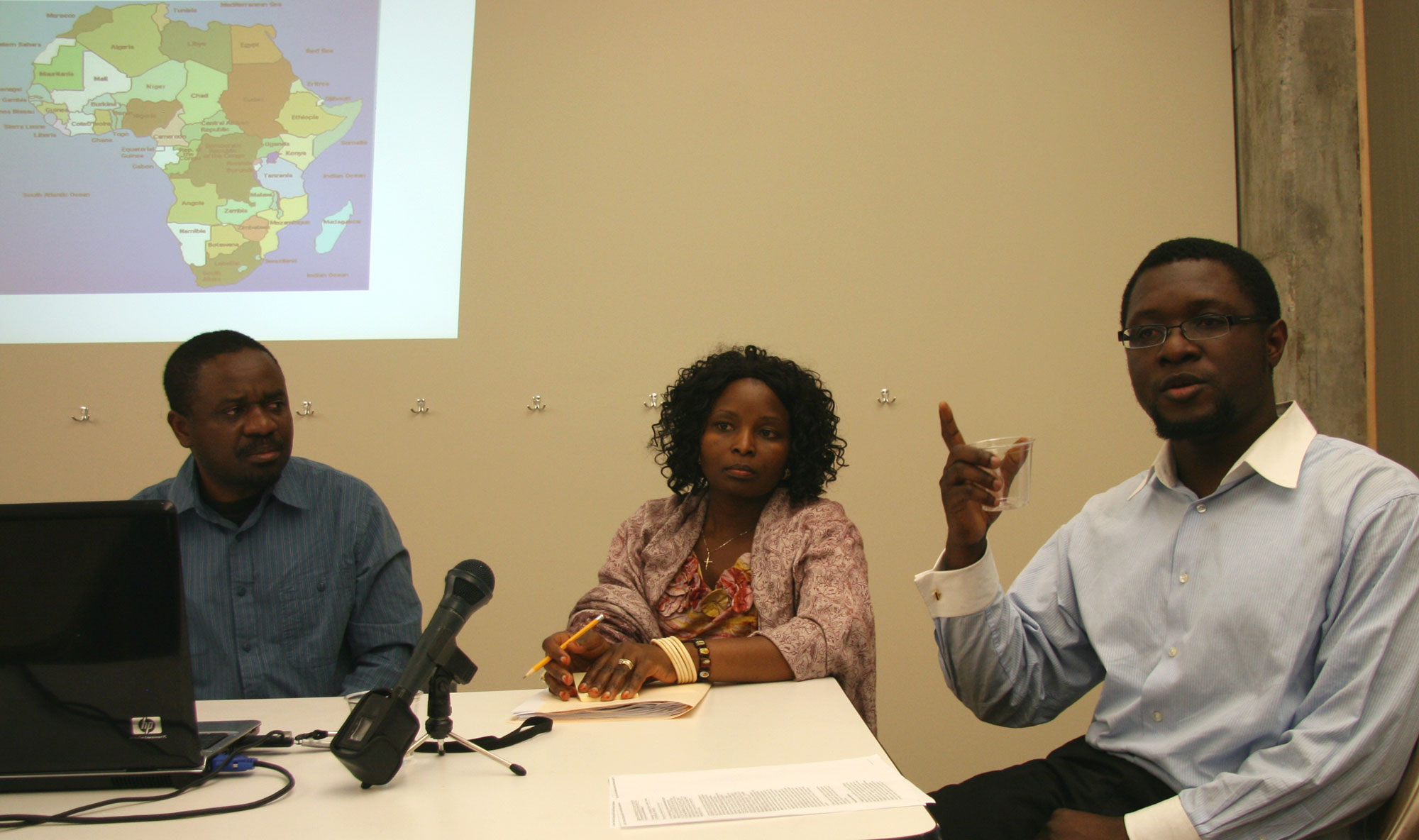
Vincent Chirimwami, Maguy Masikini and Jeremie Ruvunangiza told of the devastating consequences of minerals trade in their country. Chirimwami asked the audience whether after six million dead, “does it truly count?”
The DRC counts for 80 percent of the coltan in the world. The mineral is key to the electrical capacitors of hi-tech components. With such vast resources, neighboring countries and the world market demands are fueled by the political unrest in the country. The mining of the mineral is usually performed in dangerous conditions. But it is the money and power that drives smugglers, militias and other groups to even more grave acts. The horrific rapes of women in the country are some of the most brutal in the world. Those who survive suffer lifelong physical and mental effects.
Few organizations have been documenting the severe abuses that has occurred in the DRC over the last decade. Amnesty International and the United Nations are working to keep attention on the events happening in the DRC, especially in East Congo where the use of rape as a tool of war takes on an entirely new meaning. Some of the graphic images Masikini showed to the audience drew unanimous gasps. Yet, she contends, it happens so frequently that most women wish for death over survival. Masikini said that hospitals are overrun with new cases. The medical community is ill-equipped to handle the overwhelming numbers.
The Congolese Community of Oregon hopes to raise awareness about the atrocities and work for a political solution. Ruvunangiza said the U.S. is key to bringing about change. It cannot happen soon enough.
——————————————————————————
Additional resources
Presentation slides:
- The War in Congo by Vincent Chirimwami
- The Effects of the Conflict on Individuals by Jeremie Ruvunangiza
Videos:
- CBS 60 Minutes: War Against Women In Congo
 AIUSA Group 48
Leave a comment